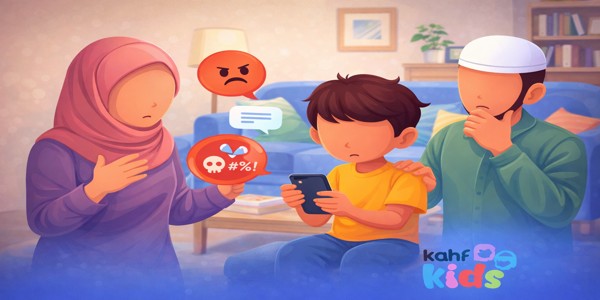
The video ends. Autoplay starts the next one before your child even looks up.
You say “last one,” and the meltdown begins. If that scene is familiar, this is not a discipline problem.
You are dealing with a product built to be hard to stop.
| Quick answer: “YouTube addiction” is not an official medical diagnosis. Clinicians call the pattern problematic media use. But what parents describe is real. There is distress when the screen goes off, viewing that crowds out sleep and family, and a child who cannot self-limit. It is driven by design, not weak willpower. It responds to structure, not punishment. |
This guide shows how to tell whether the habit is a real problem, why the risks go beyond wasted time, and how to break the loop. It sits alongside our fuller guide to screen time for kids.
Is “YouTube addiction” actually a real thing?
Short version: the word is loose. The problem is genuine.
No major diagnostic manual lists “YouTube addiction.” The DSM-5-TR, the American Psychiatric Association’s handbook, recognises only gambling disorder as a behavioural addiction.
Internet Gaming Disorder sits in a separate section for “conditions for further study.” That means it is proposed, not confirmed.
The World Health Organization’s ICD-11 added gaming disorder as a formal condition. It created no equivalent for video streaming or social media.
So the accurate clinical term is problematic media use. It means a pattern of use that harms a child’s sleep, mood, learning, or relationships.
The label matters less than the pattern. If screen media is the first thing your child thinks about and the last thing they will give up, you do not need a diagnosis to act.
The harm is taken seriously even without a diagnosis code. Families have filed lawsuits over YouTube’s addictive design, which target the same autoplay and recommendation features described below.
As of August 2026, more than 3,000 such claims are consolidated in United States federal court. A March 2026 jury awarded $6 million after finding the platform’s design contributed to a young user’s mental-health injuries.
For the wider picture, see our overview of digital addiction in children. It explains how screen time addiction develops.
Why YouTube is harder to switch off than TV ever was
A generation ago, a show ended and the screen went quiet. YouTube removed every natural stopping point on purpose.
Four design choices do the work.
- No endpoint. A recommendation feed never stops, because another video is always queued.
- Autoplay. The next video plays on its own, so your child never has to choose to continue.
- Personalisation. The feed learns what holds your child’s attention and serves more of it.
- Variable reward. Not knowing whether the next clip will be great is what keeps the loop tight.
This is why “just set a timer” often fails. The timer fights four design systems at once, and your child is holding the tablet.
There is a harder truth too. The same engine that decides how long your child watches also decides what they watch next.
The 9 questions researchers use to spot a real problem
Skip the “7 warning signs” lists. Use the tool clinicians actually use.
The Problematic Media Use Measure was developed by Domoff and colleagues in 2019. It is a parent-report screen, validated for children aged 4 to 11.
Rate each item from Never to Always.
| # | In the last month… |
| 1 | It is hard for my child to stop using screen media. |
| 2 | Screen media is the only thing that seems to motivate my child. |
| 3 | Screen media is all my child seems to think about. |
| 4 | My child’s screen media use interferes with family activities. |
| 5 | My child’s screen media use causes problems for the family. |
| 6 | My child becomes frustrated when he or she cannot use screen media. |
| 7 | The amount of time my child wants to use screen media keeps increasing. |
| 8 | My child sneaks using screen media. |
| 9 | When my child has had a bad day, screen media seems to be the only thing that helps. |
How to read your answers. This is a screening tool, not a diagnosis. The more items you marked “often” or “always,” the more the habit has crossed into problematic use.
Items 1, 6, and 8 matter most: cannot stop, frustration when blocked, and sneaking. If the habit is hurting sleep, school, or mood, talk to your paediatrician.
It isn’t only the hours. It’s what the loop feeds them.
Most advice treats YouTube as a time problem. Time is only half of it.
The other half is the recommendation engine. It decides what your child sees next, and it does not know it is talking to a child.
This is the core of why YouTube is bad for kids when it runs unsupervised.
Gaming videos are not the safe middle ground
In 2023 the Tech Transparency Project ran a test. It set up accounts posing as two 9-year-old and two 14-year-old boys, seeded with ordinary gaming content.
The feed did not keep it harmless. It escalated to school-shooting footage, graphic gun-injury videos, and firearm conversion guides, much of it not age-restricted.
- 382 firearms videos reached the 9-year-old account in one month. That is more than 12 a day.
- 1,325 reached the engaged teen account.
- Engaged accounts got violent content more than 10 times more than accounts that did not click.
Parents often treat gaming videos as the harmless option. They are the entry point.
If gaming is already part of the picture, start with our guides to safe games for kids and how to block Roblox on your kid’s phone.
Watching gaming can pull toward gaming
Research in Computers in Human Behavior (2021) found a link. Watching game streaming and problematic gaming tend to travel together.
Watching is linked to heavier play. Gaming is also the one behaviour here with a recognised disorder attached to it.
Sexual content reaches children who weren’t looking for it
The hardest numbers come from Common Sense Media’s 2023 report, a survey of 1,358 teens. The average age of first exposure to pornography was 12.
Fifteen percent had seen it by age 10 or younger. Most telling, 58% came across it by accident.
They were not searching for it. Recommendation feeds, thumbnails, and comment sections all expose children, even when a video itself is clean.
Content that looks like kids’ content, and isn’t
A study at ICWSM 2020 analysed roughly 857,000 videos. It found a 3.5% chance that a toddler following recommendations from a Peppa Pig video would hit a disturbing one within ten hops.
These are familiar characters spliced into violent or frightening scenes. 3.5% sounds small, but across a year of daily viewing it becomes near-certain.
None of these risks needed your child to go looking. That is why filtering matters as much as timing.
To lock this down on the device, see how to block haram content on your child’s phone and set up a safe internet for kids. The same thinking applies to social apps, such as whether Snapchat is safe for kids.
What we’re really protecting: a Muslim parent’s view
| “O you who have believed, protect yourselves and your families from a Fire whose fuel is people and stones.” Qur’an 66:6 (Surah At-Tahrim) |
The verse frames protection as an active duty, not a preference. Guarding what shapes a child is part of that duty.
A recommendation feed shapes a child constantly. Nobody chooses what it teaches.
Attention is something you raise, not just spend. A feed that autoplays forever trains the opposite of focus.
Nobody chose the content. Two videos into a rabbit hole, no person picked what plays.
The pediatric guidance already backs you. The American Academy of Pediatrics names violence, rude role models, unrealistic beauty standards, and selling to kids as concerns for every family.
A Muslim home’s filter is stricter, but the logic is the same. Your standards extend mainstream pediatric advice.
An algorithm has no view on who your child becomes. It optimises for watch time, not for character or belief in Allah.
Closing that gap is the parent’s job. It is the case for a curated library, the same instinct behind halal videos for kids and the best Islamic apps for kids.
What to let them watch instead, and for how long
Removing YouTube without a replacement just leaves a gap. It gets refilled with YouTube.
Decide in advance what fills the slot. Decide how long it stays open.
How much is healthy, by age
| Age | Guidance | Source |
| Under 2 | No screen media beyond video calls | WHO, 2019 |
| 2–4 | 1 hour a day maximum, less is better | WHO, 2019 |
| 5–12 | No universal number; judge by content and what it displaces | AAP, 2026 |
| 13+ | No fixed number; sleep, school, and activity come first | AAP, 2026 |
The AAP dropped its old “two-hour” rule in its 2026 guidance. For older children, what they watch and what it crowds out now matters more than a fixed clock.
To turn this into a number for your own child, try the Kahf Kids screen time calculator. For the reasoning behind the limits, read our full screen time for kids guide.
What fills the slot
Here are the alternatives, from easiest to hardest to set up.
- Downloaded or offline video. It is finite by design, so when it ends, it ends.
- A curated library with no recommendation engine. Your child picks from an adult-approved set, so finite beats filtered.
- Co-viewing on the main TV. Same content, but you can see what is playing.
- Audio. Nasheeds, story audio, and good Quran apps for kids fill the boredom slot without a screen.
- A predictable non-screen block at the same time each day gives the slot an owner. A wider list of educational and Islamic apps for kids can help you stock it.
How to break the loop: 7 steps that work
- Don’t go cold turkey. Taper down over a week or two, because abrupt removal triggers the worst meltdowns.
- Kill autoplay first. In the app, go to Settings, then Autoplay, then off.
- Replace, don’t just remove. Have the alternative ready before you cut back.
- Warn the transition. Say “two more minutes, then dinner” instead of grabbing the tablet.
- Move viewing out of bedrooms. Keep it off pre-sleep hours, which protects sleep and mood.
- Co-view sometimes. It shows you what the algorithm is actually serving your child.
- Audit your own use. Children copy what they see far more than what they are told.
When you take it away and they melt down
Expect it, and do not read it as failure. Distress when the screen goes off is a defining feature of problematic use.
The meltdown means you were right to act. It is usually worst in the first few days, then it eases.
Hold firm on the boundary, like no screen in the bedroom. You can be flexible on details, like which show or which 20 minutes.
A clear plan to keep your child safe on the internet makes this easier. Everyone knows the rules in advance.
The bottom line
| You don’t need a diagnosis to act. If your child cannot stop, melts down when the screen goes off, or sneaks extra time, the habit has tipped into problematic use. The fix is the same either way. Turn off autoplay, replace the feed with something finite, protect sleep, and choose what your child watches. |
A kids’ video app with filter
Most of the risk here traces back to one thing. It is an open, ad-driven feed that optimises for watch time and filters nothing.
Kahf Kids is built the opposite way. It is an ad-free video platform with parental controls.
- A curated, mufti-approved library. Every video is human-reviewed against Islamic values before a child sees it.
- No ads, ever. No advertiser pays to hold your child’s attention or push products mid-video.
- Parental controls and screen-time limits. Set a daily limit and the app holds the boundary for you.
- No recommendation rabbit hole. There is no autoplay chain and no watch-time engine queuing the next video.

It replaces the feed with a finite, values-aligned library. The controls do the enforcing, which is what the research here points toward.