It usually starts with five small words: “Can I watch something?” You hand over the tablet, a nasheed plays, and two taps later your child is watching something you never chose or approved. Most Muslim parents know this moment well.
The search for safe content turns into a daily negotiation with autoplay, ads, and an algorithm built to maximize watch time. Finding genuinely halal videos for kids — age-appropriate and worth your child’s time — should not feel this hard. And it doesn’t have to.
Quick Answer
Halal videos for kids are children’s videos that align with Islamic values, stay age-appropriate, and offer real educational or moral benefit. They avoid harmful content such as inappropriate imagery, music-heavy themes, or unsafe messaging. Scholar review adds a layer of authenticity most platforms lack.
Kahf Kids provides 30,000+ scholar-reviewed, ad-free videos organized by age — from Quran and Prophet stories to STEM and Islamic cartoons — in one safe, parent-controlled app.
“There is a man among the people who buys discourses of distracting amusements, so that he may mislead (people) from the Way of Allah, and make a mockery of it. For such people there is a disgraceful punishment.”
— Qur’an 31:6 (Surah Luqman)
This verse reminds us that not all entertainment is neutral; what fills a child’s time can either draw them toward good or away from it. Choosing beneficial, halal content is part of raising children with intention. The Prophet ﷺ also taught that “part of the perfection of a person’s Islam is his leaving alone that which does not concern him” (Tirmidhi).
What Are Halal Videos for Kids?
Halal videos for kids are videos permissible within Islamic guidelines — free from inappropriate content, built around good values, and suitable for a child’s age and stage.
In practice, “halal” for children’s media goes beyond avoiding the obviously haram. A truly halal video models good character (akhlaq), reinforces Islamic identity, and respects modesty in how people are shown. It offers something worth your child’s attention — a lesson, a story, a skill, or a moment of wonder about Allah’s creation.
Parents choose halal videos for two reasons. The first is protection — shielding children from content that contradicts their values. The second, increasingly the bigger one, is intentionality — wanting screen time to add something rather than quietly take something away.
At Kahf Kids, we’ve worked with thousands of Muslim families navigating the challenges of screen time. The same theme comes up again and again: parents aren’t anti-screen, they’re anti-junk.
Key Takeaways
- Halal videos align with Islamic values and stay free from inappropriate content.
- They should be age-appropriate and offer genuine educational or moral value.
- Parents choose them for protection and for more intentional screen time.
Why Finding Truly Halal Videos for Kids Is Difficult Today
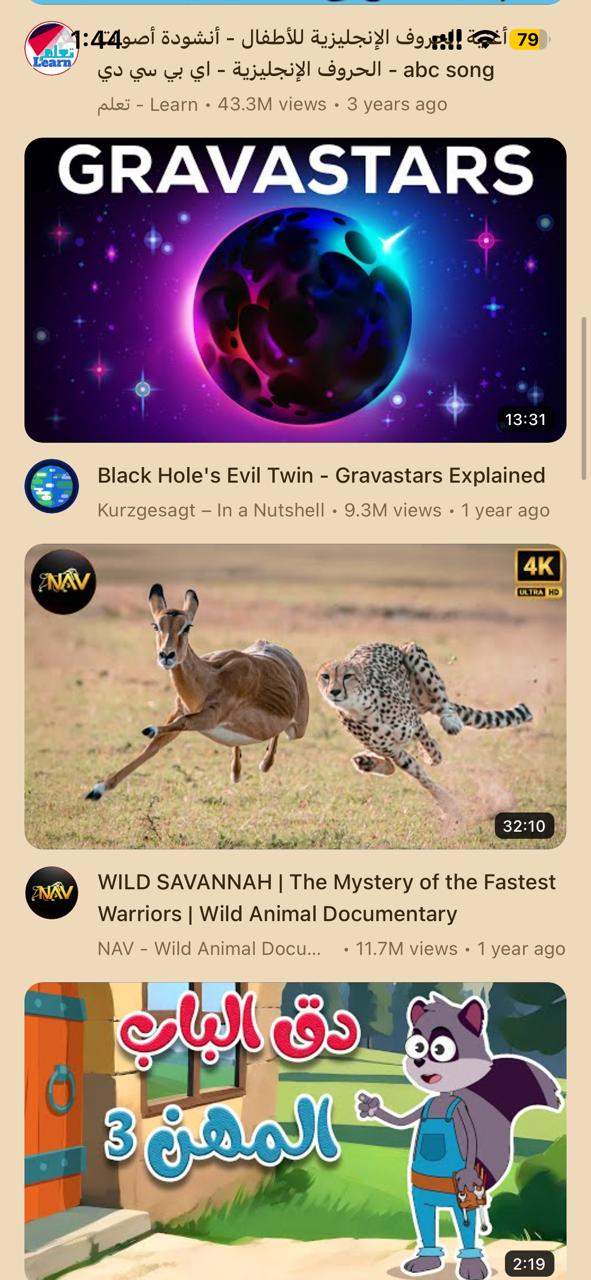
Mainstream platforms are built to maximize watch time, not to protect children — so even “kids” content arrives wrapped in ads, autoplay, and algorithmic suggestions that drift away from anything halal.
The core problem isn’t that good content doesn’t exist online — it’s that it lives next door to everything else. A child watching an innocent Islamic song is one autoplay away from music videos, one ad away from an unsuitable game promo, and one “recommended” thumbnail away from content no parent approved.
The concerns we hear most from parents:
- Recommendation algorithms — autoplay and “up next” push children toward whatever is most engaging, not most appropriate. See why YouTube is bad for kids.
- Ads — even in “kids” sections, ads interrupt, manipulate, and expose children to imagery parents never chose.
- Influencer culture — content built around status, appearance, and constant novelty quietly shapes a child’s values.
- Look-alike content — channels mimic trusted shows but insert disturbing or hollow material.
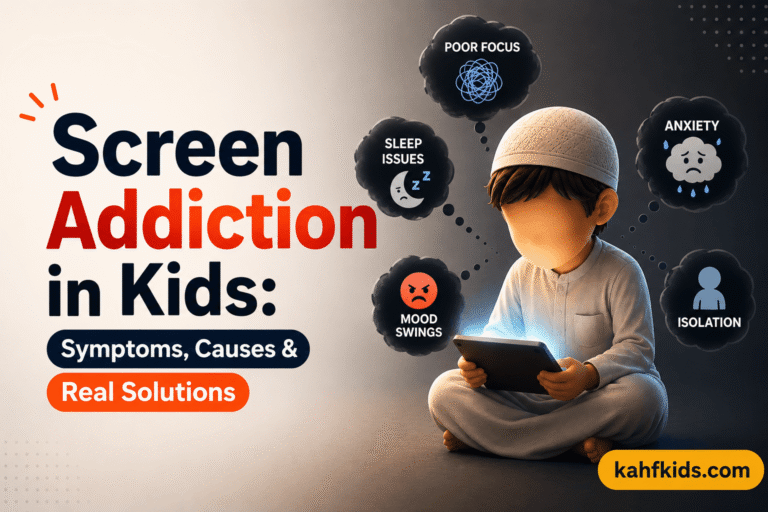
- Addiction risk — infinite feeds are engineered to be hard to stop. Spot the signs of digital addiction in children.
Expert Insight
“Most parents come to us thinking their problem is screen time. After a week of looking closely, they realize the real problem is the content pipeline — the endless, unvetted stream their child was being fed. Once you fix what flows in, the time question becomes far easier to manage.”
— Kahf Kids content review team
The Simple Fix: A Safe Space Built for Muslim Kids
Instead of policing an open platform every day, thousands of families switch the default. Kahf Kids is a safe, ad-free app with 30,000+ scholar-reviewed videos sorted by age — Quran, Prophet stories, Islamic cartoons, STEM, and more — all wrapped in parental controls. No ads, no risky autoplay, no guesswork.
What Makes a Video Truly Halal?
A video is truly halal when it respects Islamic values and modesty, teaches or models something good, suits the child’s age, and has been reviewed by someone qualified — not just labeled “kids.”
Use this quick checklist before letting your child watch anything new:
- Islamic values — nothing contradicts core beliefs or normalizes the haram.
- Modesty — characters, clothing, and themes respect Islamic standards.
- Educational or moral benefit — it teaches a skill, a story, or good character.
- Positive behavior — kindness, honesty, and respect are modeled, not cruelty.
- Age suitability — language, pacing, and themes match the child’s stage.
- Scholar or expert review — someone qualified has checked it for accuracy.
| Criteria | What to look for | Red flag |
|---|---|---|
| Values | Aligns with Islamic beliefs | Normalizes the haram |
| Modesty | Respectful dress and themes | Immodest imagery or focus |
| Benefit | Teaches or builds character | Pure time-filler |
| Age fit | Matches child’s stage | Mature themes or fear |
| Review | Checked by qualified people | No vetting at all |
Why Scholar-Reviewed Content Matters
Scholar review ensures Islamic content is accurate, age-appropriate, and trustworthy — so children learn correct information about their faith and parents stop pre-screening every video themselves.
Children absorb what they watch as fact. A Prophet story told incorrectly, a dua mispronounced, or a subtle error repeated across dozens of videos doesn’t just pass — it sticks. Scholar review protects accuracy at the exact age when foundations are being laid.
Scholar-reviewed content delivers four things open platforms can’t guarantee:
- Accuracy — Islamic facts, stories, and recitation are verified before a child sees them.
- Authenticity — content reflects established teaching, not well-meaning guesswork.
- Trust — parents hand over the tablet without a knot in their stomach.
- Confidence — children build identity on a foundation that has been checked.
A child learning the story of Prophet Yusuf (AS) should receive it the way it is taught — not a dramatized version that invents dialogue or changes the lesson. Our content review team evaluates videos for both age appropriateness and Islamic accuracy so these details hold up.
Key Takeaways
- Children treat what they watch as fact — accuracy at a young age is critical.
- Scholar review verifies Islamic content before children ever see it.
- It saves parents from pre-screening every single video themselves.
Inside Kahf Kids: 30,000+ Scholar-Reviewed Videos by Age
Kahf Kids is a safe, ad-free video app for Muslim children with 30,000+ scholar-reviewed videos organized by age and topic, plus built-in parental controls — a focused alternative to open platforms like YouTube.
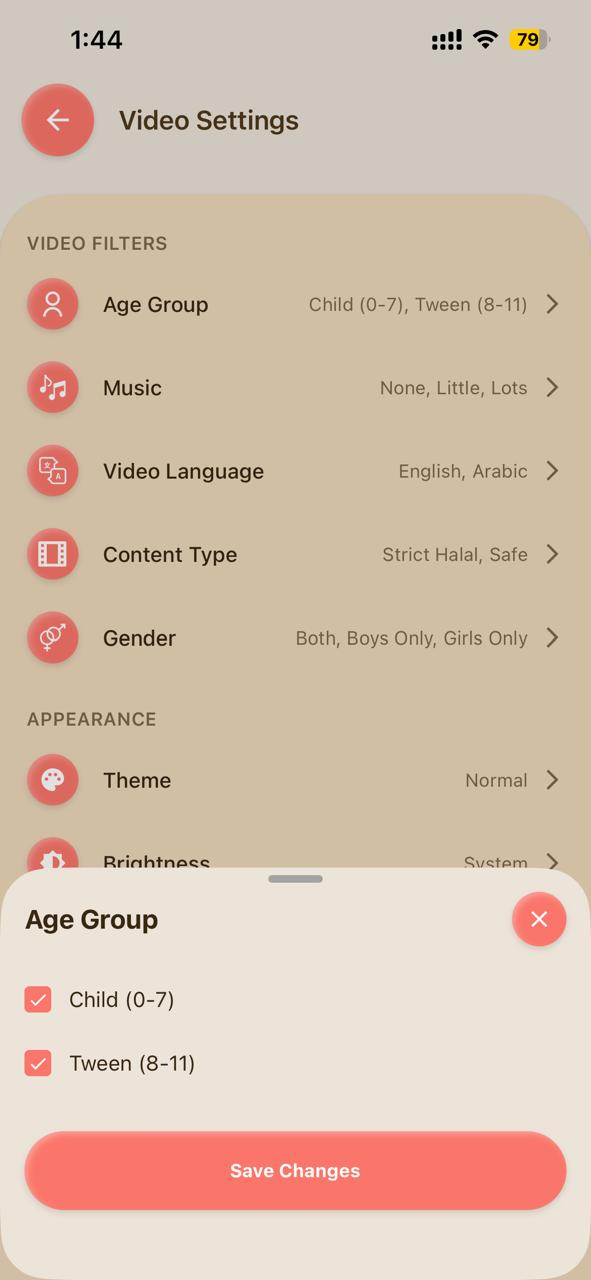
Every video passes through review before it reaches a child. Our content review team checks each one for age appropriateness, educational value, and alignment with Islamic values, then sorts it into clear categories. Parents find the right thing in seconds instead of scrolling endlessly.
Just as important is what’s missing: no ads, no autoplay into the unknown, and no engine designed to keep your child hooked.
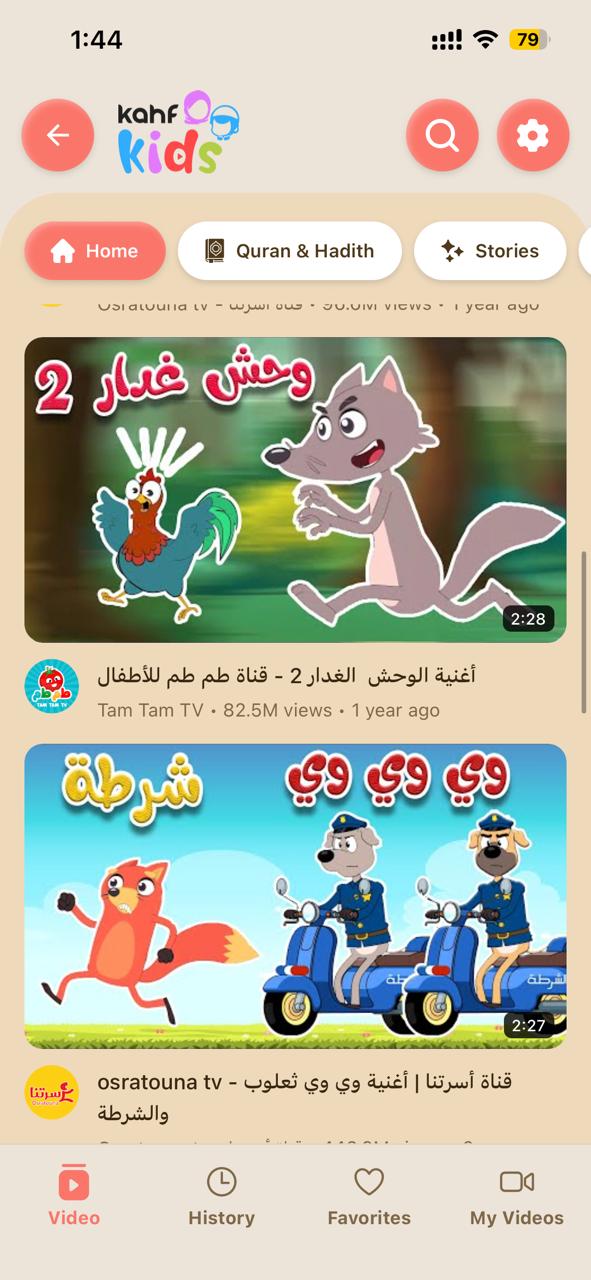
Kahf Kids at a Glance
- 30,000+ scholar-reviewed, ad-free videos
- Organized by age: 3–5, 6–8, and 9–12
- Quran, Seerah, Islamic cartoons, STEM & educational content
- Parental controls for time limits and categories
The library spans the topics families actually want:
- Quran learning — recitation, memorization support, and tajweed basics.
- Seerah & Prophet stories — the life of the Prophet ﷺ and the prophets before him.
- Islamic stories & cartoons — values-based entertainment children genuinely enjoy.
- STEM & science — curiosity about Allah’s creation, explained for young minds.
- Educational content — language, numbers, manners, and life skills.
Parental controls let you set limits, choose categories, and shape what your child can access — the intentional setup we cover in how to keep your child safe on the internet. Based on feedback from Muslim parents using Kahf Kids, the most valued feature isn’t any single video — it’s the calm of knowing the whole environment is safe by default.
Best Halal Videos for Ages 3–5
For ages 3–5, choose short, gentle videos that teach the Arabic alphabet, simple duas, good manners, and basic Islamic concepts through songs and friendly characters.
At this stage, less is more. Young children learn through repetition, warmth, and simple visuals — not fast cuts or complex plots. The goal is comfort and gentle exposure.
- Arabic alphabet — letter recognition through song and color.
- Basic duas — short daily supplications children memorize easily.
- Islamic songs (nasheeds) — vocals-led, gentle, and repetitive for early memory.
- Character development — sharing, kindness, saying “Bismillah,” respecting parents.
- Islamic cartoons — calm, age-appropriate stories with clear lessons.
Kahf Kids experts recommend keeping sessions short and co-viewing when you can. Sitting beside a preschooler and naming what they see turns passive watching into shared learning.
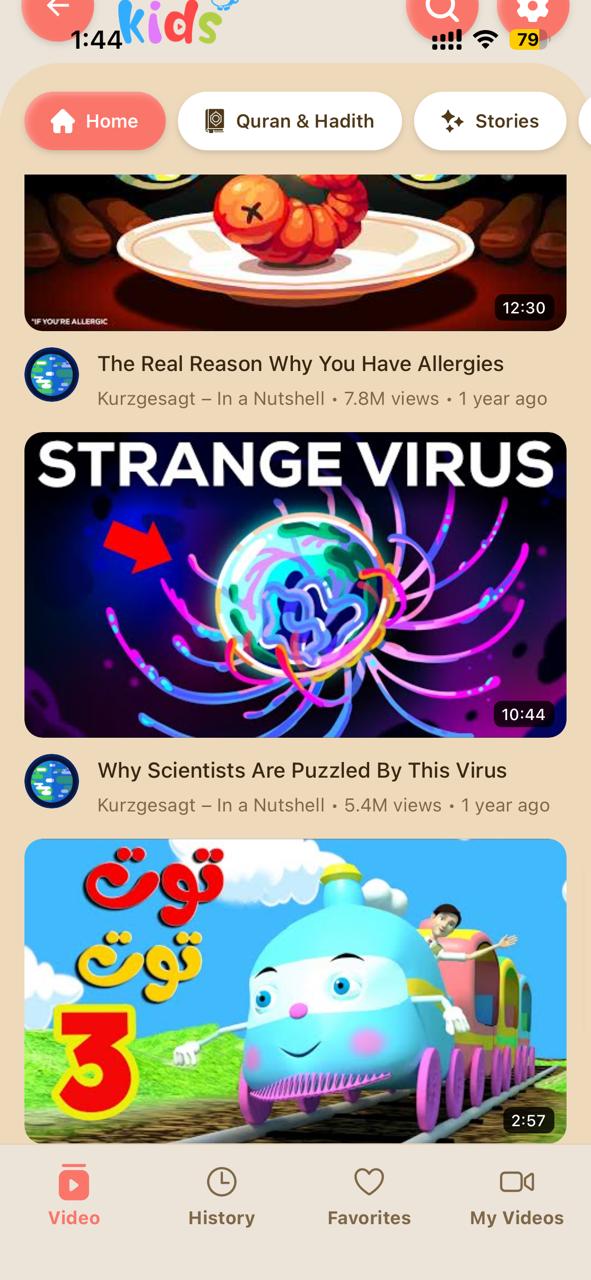
Best Halal Videos for Ages 6–8
For ages 6–8, look for Prophet stories, Quran stories, beginner science, and Islamic history that reward a longer attention span with real narrative and learning.
Children this age can follow a story arc and ask sharper questions. Content can carry more substance — the why behind the lesson — while staying clear of fear-based or overly mature themes.
- Prophet stories — the lives and lessons of the prophets, told accurately.
- Quran stories — the narratives behind surahs children are beginning to learn.
- Science videos — nature, space, and the body framed as signs of Allah’s creation.
- Islamic history — the companions and early Islam, age-appropriately simplified.
- Learning activities — videos that pair with reading, drawing, or safe educational games.
Best Halal Videos for Ages 9–12
For ages 9–12, prioritize deeper Seerah, character-building content, STEM, critical thinking, and stories of Muslim role models that connect faith to real life.
Pre-teens are forming identity and testing ideas. This is the age to move from “what happened” to “what it means for me,” and to offer role models who show that faith and ambition belong together.
It’s also when open platforms and social apps pull hardest — a good time to revisit boundaries, as we discuss in whether Snapchat is safe for kids.
- Seerah in depth — the Prophet’s ﷺ strategy, mercy, and leadership.
- Character building — honesty, responsibility, and handling peer pressure.
- STEM learning — coding, engineering, and science that stretch curiosity.
- Critical thinking — content that invites questions rather than passive watching.
- Muslim role models — scientists, scholars, athletes, and builders who lived their values.
Benefits of Halal Videos for Child Development
High-quality halal videos support identity, values, language, learning, and emotional growth — but the benefit comes from quality and context, not screen time alone.
Research on children’s media is consistent on one point: what children watch matters more than the raw number of minutes. The American Academy of Pediatrics now emphasizes quality, co-viewing, and conversation over rigid limits — around one hour of high-quality content per day for ages 2–5 (AAP screen time guidelines). The World Health Organization advises no screen time under age 1 and no more than one hour for ages 2–4 (WHO guidance).
Within those healthy limits, thoughtfully chosen halal content can contribute to:
- Identity formation — children see their faith reflected positively and feel they belong.
- Values — honesty, gratitude, and respect modeled in memorable ways.
- Language development — exposure to Arabic words, Quran, and rich vocabulary.
- Learning — science, history, and skills in formats children retain.
- Emotional growth — stories that build empathy and name feelings in healthy ways.
Expert Insight
“The same twenty minutes can either drain a child or feed them. Quality content turns screen time from a babysitter into a building block — and parents feel the difference in their child’s questions, vocabulary, and behavior within weeks.”
— Kahf Kids team
Halal Screen Time vs. Unlimited Screen Time
Curated halal screen time removes ads and risky recommendations and adds educational and Islamic value with parental control — while open-platform viewing optimizes for watch time, not your child’s wellbeing.
| Factor | Halal / Curated (e.g. Kahf Kids) | Unlimited / Open Platforms |
|---|---|---|
| Ads | Ad-free | Frequent, targeted ads |
| Recommendations | Curated, safe-by-default | Algorithm chasing watch time |
| Educational value | Vetted for benefit | Hit or miss |
| Safety | Reviewed before publishing | Largely unvetted |
| Islamic values | Built in | Coincidental at best |
| Parent controls | Robust and central | Limited, easy to bypass |
How Parents Can Create a Safer Digital Environment
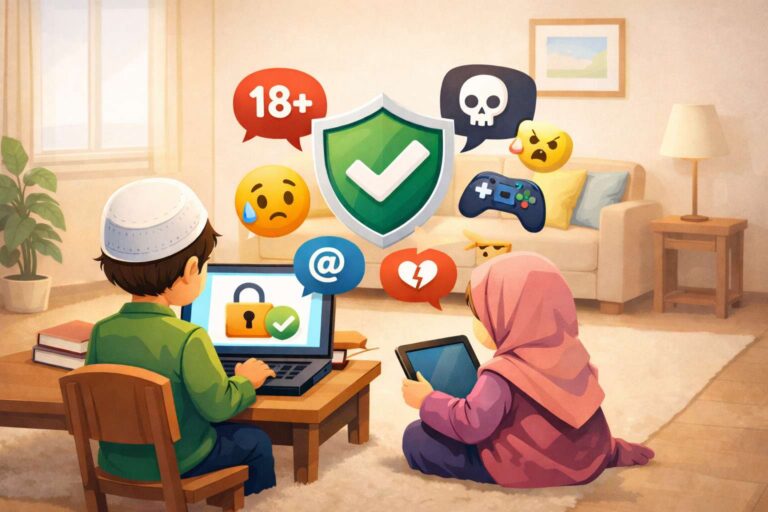
Review what your child watches each week, set clear device rules, use a family media plan, apply sensible time limits, and stay involved — tools help, but parent presence matters most.
- Review the content first. Spend one week noting what your child watches. Quality problems are usually obvious once you look.
- Set device rules. No devices in bedrooms, at meals, or the hour before sleep.
- Build a family media plan. Agree together on when, where, and what — children follow rules they helped make.
- Apply time limits. Use app-level limits so stopping isn’t a daily battle. See screen time addiction.
- Block what doesn’t belong. Use parental controls and safe platforms; here’s how to block inappropriate content.
- Stay involved. Co-view, ask questions, and talk about what they saw — a theme in how to raise righteous Muslim children.
Why Many Muslim Families Are Looking Beyond YouTube
Muslim families are moving to curated apps because open platforms expose children to unpredictable recommendations, ads, and addictive design — problems no amount of manual supervision fully solves.
The shift isn’t about rejecting technology; it’s about choosing better defaults. Common Sense Media’s 2025 census found children aged zero to eight average about two and a half hours of screen media a day, with YouTube among the most-used services (Common Sense Media, 2025). When that much time runs through a platform optimized for engagement, four risks compound:
- Algorithm risks — suggestions drift toward sensational content over time.
- Content unpredictability — what’s safe today can change with one new upload.
- Advertising — commercial pressure aimed directly at young children.
- Screen addiction — infinite, autoplaying feeds are hard for kids to leave.
Weighing alternatives? Our roundups of the best Islamic apps for kids and the best educational and Islamic apps, videos, and games are useful starting points.
Frequently Asked Questions
What are halal videos for kids?
Halal videos for kids are children’s videos that align with Islamic values, stay age-appropriate, and offer educational or moral benefit while avoiding inappropriate content. The best ones are reviewed by qualified people before children watch them.
Are Islamic cartoons halal?
Many are, but not automatically. An Islamic cartoon is halal when it respects modesty, avoids inappropriate themes or excessive music, and teaches good values accurately. Reviewing the specific show — or using a scholar-reviewed library — is the safest approach.
Is YouTube safe for Muslim children?
Open YouTube is hard to keep safe because its recommendation engine, ads, and autoplay can expose children to unsuitable content quickly. Many families prefer curated, ad-free apps built specifically for Muslim kids, such as Kahf Kids.
What should Muslim children watch online?
Age-appropriate content that strengthens faith and learning: Quran, Prophet stories, Islamic manners, science framed around Allah’s creation, and values-based stories. Ideally it should be ad-free and reviewed for accuracy.
What is the best Islamic video app for kids?
The best app combines a large, scholar-reviewed library with strong parental controls and no ads. Kahf Kids offers 30,000+ reviewed videos organized by age, alongside parental controls in a safe environment.
How can I block inappropriate videos?
Use device and app-level parental controls, disable autoplay, and rely on curated platforms instead of open feeds. Our guide on blocking inappropriate content walks through the steps.
How much screen time is healthy for children?
Pediatric guidance suggests no screens under age 1, up to about one hour of high-quality content for ages 2–5, and consistent limits after that. Quality and co-viewing matter more than raw minutes.
What are the benefits of scholar-reviewed videos?
They ensure Islamic information is accurate and age-appropriate, build parents’ trust, and give children a reliable foundation for their faith. They also save parents from verifying every video themselves.
Are halal video apps ad-free?
The best ones are. Removing ads protects children from commercial manipulation and from imagery parents never approved. Kahf Kids is fully ad-free.
What ages are halal video apps designed for?
Quality apps organize content by stage — typically 3–5, 6–8, and 9–12. This way videos match a child’s attention span, language level, and maturity.
Can halal videos help my child learn Arabic or Quran?
Yes. Repetition-friendly nasheeds, alphabet videos, and recitation support introduce Arabic naturally. Quran-focused content reinforces what children are memorizing.
How do I balance screen time with other activities?
Set clear limits, keep devices out of bedrooms and meals, and pair screens with reading, play, and family time. A simple family media plan makes this far easier to sustain.
Conclusion: Protect Their Screen Time. Strengthen Their Deen.
Halal videos for kids aren’t about cutting children off from the digital world — they’re about choosing a better one. When the content flowing to your child is accurate, age-appropriate, ad-free, and aligned with your values, screen time stops being a worry and becomes a tool. The goal is simple: less junk, more benefit, and a child who associates their faith with curiosity and joy.
Our Recommendation
If your child regularly watches videos online, start this week by reviewing what they consume — looking for educational value, Islamic appropriateness, and age suitability. Then choose a platform that combines scholar-reviewed content with parental controls, such as Kahf Kids.